
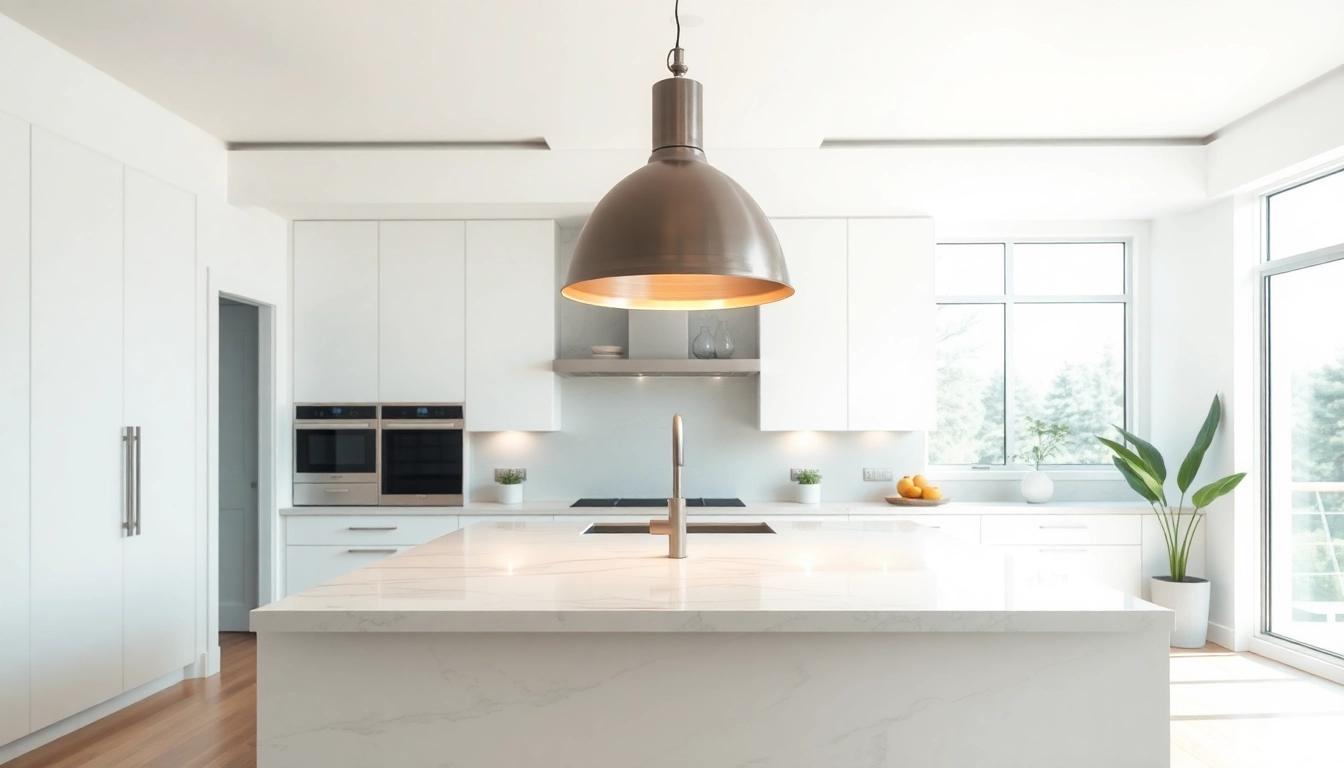
Understanding Island Lighting and Its Importance
Island lighting plays a crucial role in kitchen design, transforming functional spaces into stunning focal points. The kitchen island serves as a multi-purpose hub, where cooking, eating, and socializing converge. To enhance this area’s utility and aesthetics, careful consideration of island lighting is essential. The right lighting not only illuminates the area effectively but also adds to the overall atmosphere of the kitchen, making it a welcoming place for family and guests alike.
The Role of Island Lighting in Kitchen Design
Island lighting significantly impacts kitchen design, providing both functional and aesthetic benefits. Functionally, it ensures that the workspace is well-lit, allowing for safe and precise food preparation. A well-lit island can enhance visibility for cooking tasks such as chopping ingredients or plating meals.
Aesthetically, island lighting contributes to the kitchen’s overall style and theme. It can define the space, enhance architectural features, and complement other design elements. The combination of functionality and visual appeal makes island lighting a pivotal component in modern kitchen design.
Types of Island Lighting Options
A variety of lighting options are available for kitchen islands, each offering distinct benefits. Here are some popular types:
- Pendant Lights: These are widely favored for their style and versatility. Available in various designs, including minimalist, industrial, and vintage, pendant lights can be hung in groups or as a single statement piece to create visual interest.
- Chandeliers: A chandelier can add a touch of elegance to an island. Ideal for larger spaces, these fixtures should be hung at an appropriate height to ensure functionality without obstructing sightlines.
- Recessed Lighting: Installed into the ceiling, recessed lights provide a clean and modern look. This option is beneficial for providing general illumination while allowing the focus to remain on other decorative fixtures.
- Track Lighting: Flexible and adjustable, track lighting allows you to direct light where it’s needed most. This option is particularly effective in spaces where the island’s function may change.
Factors to Consider When Choosing Island Lighting
When selecting island lighting, several crucial factors must be taken into account to ensure optimal results:
- Size of the Island: The size and shape of your island dictate the scale and number of fixtures required. Larger islands may require multiple fixtures to provide adequate lighting.
- Height of the Ceiling: Higher ceilings may necessitate the use of longer hanging fixtures, while lower ceilings should utilize flush mounts or shorter pendants to maintain proper proportions.
- Style of the Kitchen: The lighting should complement the overall kitchen design. A modern kitchen may benefit from sleek, geometric fixtures, while a rustic design may favor more traditional, organic shapes.
- Brightness and Color Temperature: Consider the level of brightness required for various tasks. Warmer color temperatures create a cozy atmosphere, while cooler temperatures promote alertness and activity.
Best Styles for Island Lighting
Modern Aesthetics in Island Lighting
Modern island lighting embraces simplicity, clean lines, and innovative materials. Common elements include:
- Minimalist Designs: Fixtures with simple geometric shapes and neutral colors can create a sleek, contemporary look. These designs often focus on function while maintaining an understated elegance.
- Industrial Influences: Featuring raw materials such as metal and glass, industrial-style lighting often showcases exposed bulbs and rugged finishes, adding urban charm to the kitchen.
Traditional Trends in Island Lighting
In contrast, traditional island lighting evokes warmth and charm through ornate details and classic shapes. Key features include:
- Classic Chandeliers: Traditionally styled chandeliers often incorporate intricate designs, candle-like bulbs, and materials such as wrought iron or brushed brass, making them a perfect fit for classic kitchens.
- Glass Lanterns: Providing a touch of historical elegance, glass lanterns can blend seamlessly with rustic or farmhouse-style kitchens, offering soft, ambient lighting.
Mixing Styles for Unique Island Lighting
For homeowners looking to express their personality, mixing different lighting styles can create a unique and dynamic look. Consider the following approaches:
- Eclectic Combinations: Incorporating variations of pendant lights and chandeliers can create visual intrigue and enhance your island’s overall aesthetic. Balance is key—aim for harmonious color schemes and complementary textures.
- Layered Lighting: Combining pendant lights with recessed or track lighting can deliver both focused task lighting and broader ambient illumination, enhancing both functionality and style.
Installation Tips for Island Lighting
Planning the Layout for Effective Island Lighting
A well-thought-out lighting layout is essential for ensuring effective illumination in kitchen islands. Key steps include:
- Determine the Number of Fixtures: Base this decision on the size and shape of your island, as well as the desired lighting effect.
- Consider Placement: Position fixtures equidistantly across the width of the island to ensure even light distribution, typically spaced around 30 inches apart.
DIY vs Professional Installation for Island Lighting
Deciding whether to handle installation yourself or hire a professional depends on several factors:
- Skill Level: If you are comfortable with basic electrical work and have the necessary tools, DIY installation can save money. However, if you are uncertain, hiring a licensed electrician ensures safety and compliance with local codes.
- Complexity of the Project: More complex installations, such as adding new wiring or working with high ceilings, may require a professional’s expertise.
Common Mistakes to Avoid During Installation
While installing island lighting, it’s crucial to avoid making these common errors:
- Improper Height: Hanging lights too high or low can diminish their effectiveness. Aim for 30-36 inches above countertops for optimal results.
- Ignoring Electrical Safety: Always turn off power at the circuit breaker before commencing installation. Double-check connections to prevent hazards.
Maintenance and Care of Island Lighting
Cleaning Techniques for Different Lighting Fixtures
Regular maintenance enhances the longevity and appearance of your island lighting. Consider the following cleaning techniques:
- Glass Fixtures: Use a soft, damp cloth or a glass cleaner for smudge-free results. Avoid abrasive materials that can scratch surfaces.
- Metal Fixtures: Wipe down with a slightly damp cloth to remove dust and grease, ensuring not to use harsh chemicals that can tarnish finishes.
Replacing Bulbs and Fixtures in Island Lighting
Ultimately, timely replacement of bulbs and fixtures is necessary to maintain effective lighting. Here’s how to do it safely:
- Check Compatibility: Always ensure replacement bulbs match the fixture’s specifications, including wattage and socket type.
- Ensure Power is Off: Before replacing any bulbs, make sure to turn off the light switch or the circuit breaker for safety.
Ensuring Longevity for Your Island Lighting
To facilitate the longevity and functionality of your island lighting, consider these tips:
- Opt for Energy-Efficient Bulbs: LED bulbs not only save energy but also have longer lifespans—reducing the need for frequent replacements.
- Regular Inspections: Routinely check your fixtures for any signs of wear or damage. Prompt repairs can prevent larger issues down the line.
FAQs About Island Lighting
What is island lighting?
Island lighting refers to fixtures specifically designed to illuminate kitchen islands, enhancing both functionality and style.
What types of island lighting are available?
Available types include pendant lights, chandeliers, and recessed lighting, each offering unique styles and effects.
How high should island lighting be hung?
Typically, island lighting should hang 30-36 inches above the countertop for optimal illumination and aesthetics.
Can I mix different styles of island lighting?
Yes! Mixing styles can create a personalized look, but ensure cohesive elements for a balanced appearance.
How do I maintain my island lighting?
Regular dusting and cleaning, replacing bulbs as necessary, and checking fixtures will ensure long-term performance.